
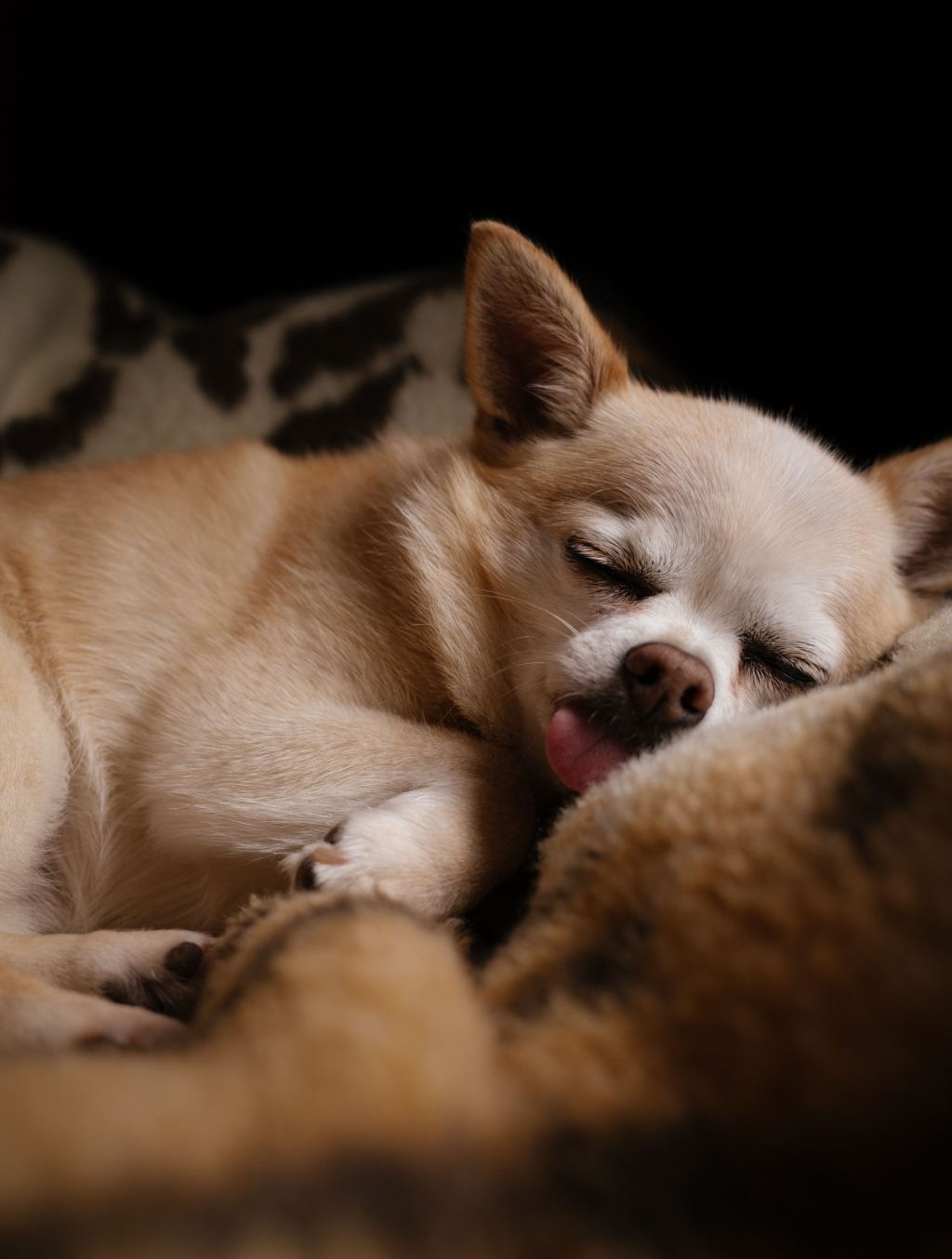
Dogs have a remarkable ability to fall asleep in positions that look anything but comfortable. Curled into a tiny ball, stretched across the entire sofa or completely upside down with all four legs in the air — every dog seems to have a favourite.
While a sleeping position can’t tell you exactly what your dog is thinking, it can offer little clues about their comfort, temperature and how relaxed they’re feeling.
Here are eight of the most common dog sleeping positions and what they may mean.
1. The Curled-Up Doughnut
You know the one — nose towards the tail with their entire body curled into a little circle.
Curling up helps dogs conserve body heat while protecting their belly. It’s a perfectly normal sleeping position and can be especially appealing when they’re somewhere cool.
Some dogs simply find it incredibly cosy.
2. The Belly-Up Sleeper
There’s something particularly funny about walking into a room and finding your dog completely upside down.
Sleeping with their belly exposed can indicate that a dog is feeling relaxed and comfortable in their surroundings. It can also help them cool down because there’s less fur around the belly.
If your dog sleeps like this regularly at home, they’re probably pretty comfortable there.
3. The Side Sleeper
Lying stretched out on one side is another relaxed sleeping position.
Your dog’s body isn’t particularly protected in this position, so you’ll often see it when they’re comfortable enough to settle into a deeper sleep.
Don’t be surprised if you notice little paw movements while they’re there — dogs can move, twitch or make noises during sleep.
4. The Superman
Front legs forward. Back legs behind. Belly flat on the floor.
Congratulations: you have a flying puppy.
This position is particularly common in puppies and energetic dogs. It also leaves them conveniently positioned to jump straight back into action when something interesting happens.
A cool floor may make it even more appealing on a warm day.
5. The Cuddle Sleeper
Some dogs don’t just want to sleep near you. They need to be on you.
They might curl against your legs, rest their head on you or somehow occupy your entire side of the bed.
Dogs are social animals, and sleeping close to you can simply be comforting. Your warmth probably doesn’t hurt either.
6. The Back-to-Back Sleeper
If your dog sleeps with their back pressed against you — or another pet — don’t take the lack of eye contact personally.
Physical contact while sleeping can be a sign that they’re comfortable sharing their resting space with you.
It’s essentially the dog version of I’m going to sleep, but you’re staying right here.
7. The Under-the-Blanket Burrower
Some dogs seem convinced they were born to live underneath a duvet.
Burrowing can provide warmth and a cosy, enclosed environment. Certain dogs are naturally much more enthusiastic about burrowing than others.
Just make sure your dog can easily get out and isn’t becoming too hot underneath heavy bedding.
8. The “How Is That Comfortable?” Position
Head hanging off the sofa. One leg pointing upwards. Body twisted in two completely different directions.
There may not be a deep psychological explanation for this one.
Sometimes dogs are simply weird sleepers.
If they’re relaxed, breathing normally and happily get up afterwards, an unusual sleeping position by itself isn’t necessarily something to worry about.
So, What Does Your Dog’s Sleeping Position Really Mean?
Sleeping positions can give us clues, but they shouldn’t be treated like a personality test.
Dogs change positions throughout the night depending on temperature, comfort, their surroundings and simply what feels good at the time.
What’s more useful is knowing what’s normal for your dog.
If they suddenly start sleeping very differently, struggle to lie down or get up, seem restless, repeatedly change position or appear uncomfortable, it’s worth speaking with your vet.
Otherwise, enjoy the strange positions.
And maybe take a photo before they wake up.
 The Paw Muse
Leave a comment